
Devon Wildlife Trust The yellow trumpets of daffodils brighten up the dullest spring day as they cluster together in gardens, on roadsides and in parks during March and April. But these are often the planted or escaped garden varieties. A real treat is spotting a Wild daffodil among the dappled shade of an ancient woodland, or pushing up through the grasses of a damp meadow. Once abundant and hand-picked for markets, this wildflower is now much rarer, having declined during the 19th century as a result of habitat loss. It can be seen in parts of south Devon, the Black Mountains in Wales, the Lake District in Cumbria, and along the Gloucestershire-Herefordshire border.
How to identify
The Wild daffodil has narrow, grey-green leaves and a familiar daffodil flower, but with pale yellow petals surrounding a darker yellow trumpet; this two-tone look is one way to tell them apart from their garden relatives. The Wild daffodil is also relatively short and forms clumps, carpeting the ground.
https://www.devonwildlifetrust.org/wildlife-explorer/wildflowers/wild-daffodil
Woodland Trust Did you know that the UK is home to a native, wild species of daffodil? Forget the gaudy imposters lining roadsides and parks this spring - head to the woods for an encounter with the real thing.
The UK's wild daffodil (Narcissus pseudonarcissus) might be less showy than the bold, bright varieties planted in gardens and villages across the land, but it is still unmistakable. Look for the familiar trumpet-shaped tube at the centre in a warm, egg-yolk yellow, surrounded by pale yellow petals. The leaves are long, thin and flat with a grey-green colour.
Wild daffodils are shorter than their ornamental counterparts and also more difficult to find, but where they do grow they often form carpets across the woodland floor. Look for them flowering in March and April.
https://www.woodlandtrust.org.uk/blog/2021/02/where-to-see-wild-daffodils/
Fingle Woods, Devon
A stunning ancient wood tucked away in the northern part of Dartmoor, complete with stunning views, a tumbling river and a wealth of woodland archaeology to explore.
The restoration work we're doing is allowing more sunlight to reach the woodland floor, encouraging wild flowers to spread along verges and glades. As well as wild daffodils you can also expect to spot wood sorrel, primrose, dog’s mercury, red campion, bluebells, wood anemone, wild garlic and yellow archangel in spring.
https://www.woodlandtrust.org.uk/visiting-woods/woods/fingle-woods/
Is your local wood a hidden gem? Find a wood near you (for your local permitted exercise)
Search thousands of woods across the UK and gather information on the local facilities, features, wildlife and history in the area.
https://www.woodlandtrust.org.uk/visiting-woods/woods/
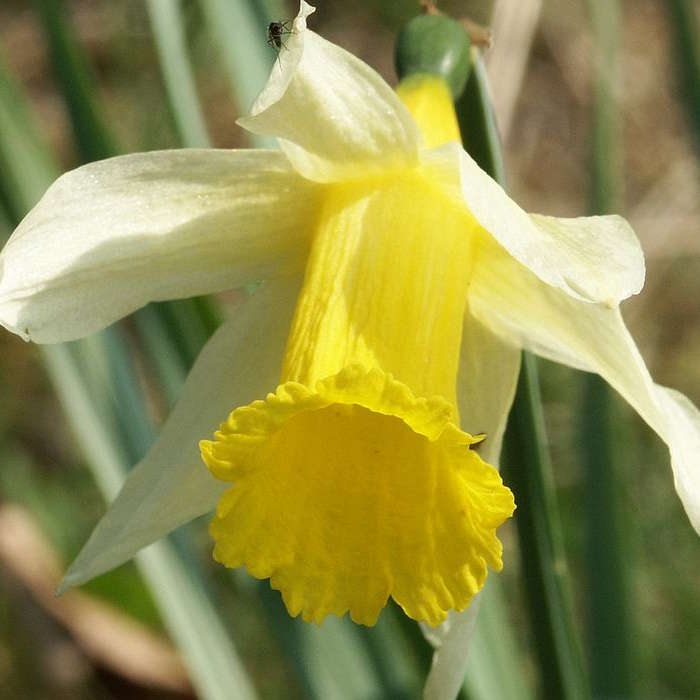
Photo: https://commons.wikimedia.org/wiki/File:Narcissus_pseudonarcissus_flower_300303.jpg
Devonshire Association The Botany Section was founded in 1908 to promote the study and enjoyment of Devon’s wild plants, including bryophytes (mosses), lichens and fungi.
https://devonassoc.org.uk/organisation/sections/botany-section/
Plantlife Our native Daffodil is smaller than many garden varieties but is still a striking sight in early spring.
It is also known as the 'Lent lily' or 'Easter lily' since it often blooms and fades within the Lenten period. The wild Daffodil is smaller than horticultural varieties, with paler petals and a deep yellow trumpet-like tube. The leaves are grey-green, thin, long and flattened. It grows in groups so can be quite an impressive sight.
Once one of the most common wild flowers to be found in the English and Welsh countryside, this wild flower declined mysteriously in the mid-nineteenth century. Picking by passers-by doesn't seem to have been the cause - Daffodils are relatively resistant to this practice. A more likely culprit was the simultaneous fall in cash-crops grown by locals hoping to capitalising on the flower's popularity, combined with agricultural intensification and mismanagement of its habitat. There is a risk that wild Daffodils will hybridise with the cultivated varieties.
https://www.plantlife.org.uk/uk/discover-wild-plants-nature/plant-fungi-species/daffodil-wild
Royal Horticultural Society Narcissus are bulbous herbaceous perennials with linear leaves and leafless stems bearing flowers, which may be solitary or in umbels, with 6 spreading perianth segments and a cup or trumpet-shaped corona.
N. pseudonarcissus is a small trumpet daffodil up to 35cm in height, with usually glaucous foliage and flowers 4-6cm in width, with deep yellow trumpet and pale yellow perianth segments.
https://www.rhs.org.uk/Plants/11388/i-Narcissus-pseudonarcissus-i-(13)/Details
National Biodiveristy Network The NBN Atlas is a collaborative project that aggregates biodiversity data from multiple sources and makes it available and usable online. It is the UK’s largest collection of freely available biodiversity data.
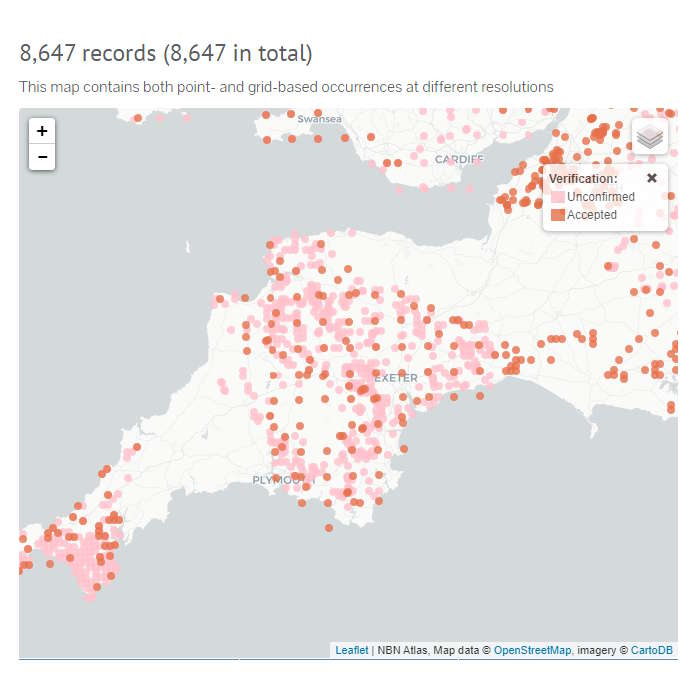
Narcissus pseudonarcissus https://species.nbnatlas.org/species/NBNSYS0000014596
Wikipedia Narcissus pseudonarcissus (commonly known as wild daffodil or Lent lily) is a perennial flowering plant.
This species has pale yellow tepals, with a darker central trumpet. The long, narrow leaves are slightly greyish green in colour and rise from the base of the stem. The plant grows from a bulb. The flowers produce seeds, which when germinated, take five to seven years to produce a flowering plant. (Sexual [seed] reproduction mixes the traits of both parent flowers, so if garden hybrid cultivars are planted close to wild populations of Narcissus pseudonarcissus, there is a danger that the new seedlings, having hybrid vigour, could out-compete the wild plants.)



