Devon Wildlife Trust A hardy little plant, the Primrose can flower from as early as December in mild years, appearing all the way through the spring until May. It favours woodland clearings, hedgerows and grassland habitats, and sometimes even gardens. Primroses are the food plant of the caterpillars of the rare Duke of Burgundy butterfly, which is a Priority Species under the UK Post-2010 Biodiversity Framework. Since Victorian times, April 19th has been known as 'Primrose Day' in honour of the late Prime Minister Benjamin Disraeli; Primroses, his favourite flowers, are placed at his statue in Westminster Abbey and his grave at Hughenden in Buckinghamshire.
How to identify
Primroses are low-growing plants with rough, tongue-like leaves that grow in a rosette. Their flowers are large and creamy, with deep yellow centres, and often appear clustered together.
https://www.devonwildlifetrust.org/wildlife-explorer/wildflowers/primrose
Woodland Trust Primroses are a cheerful sign of spring. They are one of the first woodland blooms and an important nectar source for butterflies. Look out for their friendly yellow in woodland clearings.
Primroses are common and widespread across Britain and Ireland. They are found in woods, at the base of hedgerows and in grasslands. They can bloom as early as late December and flower until May.
https://www.woodlandtrust.org.uk/trees-woods-and-wildlife/plants/wild-flowers/primrose/
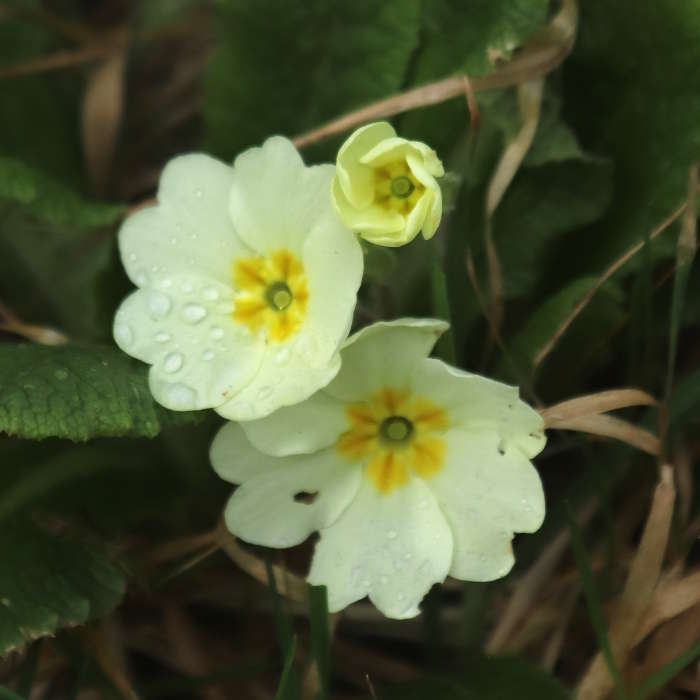
Primroses in our garden, Chulmleigh 24th February 2021 (Photo: Grant Sherman)
Devonshire Association The Botany Section was founded in 1908 to promote the study and enjoyment of Devon’s wild plants, including bryophytes (mosses), lichens and fungi.
https://devonassoc.org.uk/organisation/sections/botany-section/
Plantlife One of surest signs that spring is on the way. Primrose's pale yellow flowers can be a common sight across the UK.
The name derives from the Latin prima rosa meaning 'first rose' of the year, despite not being a member of the rose family. In different counties of England it is also referred to as butter rose, early rose, Easter rose, golden rose and lent rose.
In large populations there is a variation in the colour, texture and size of primrose flowers. Native species can produce flowers in shades ranging from pale cream to deep yellow. There is even a variety with white flowers round a pale yellow eye, and also a rhubarb-and-custard, or pink, form. Bizarre forms include an umbellate form in which flowers form a spray on top of a longer stalk similar to a cowslip, and doubles.
https://www.plantlife.org.uk/uk/discover-wild-plants-nature/plant-fungi-species/primrose
Royal Horticultural Society Primula are herbaceous or semi-evergreen perennials, forming a basal rosette of simple leaves, with salver-shaped or bell-shaped flowers which may be solitary or carried in an umbel or in whorls on an erect stem.
P. vulgaris subsp. vulgaris is a rosette-forming perennial to 20cm, with obovate light green leaves and clusters of fragrant, long-stalked pale yellow flowers 2.5-4cm in width
https://www.rhs.org.uk/Plants/13904/i-Primula-vulgaris-i-subsp-i-vulgaris-i-(Pr-Prim)/Details
National Biodiveristy Network The NBN Atlas is a collaborative project that aggregates biodiversity data from multiple sources and makes it available and usable online. It is the UK’s largest collection of freely available biodiversity data.
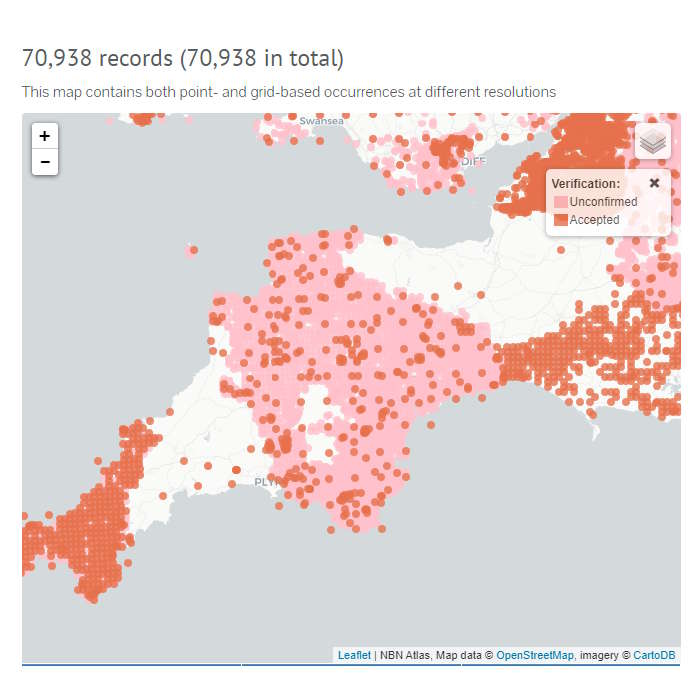
Primula vulgaris https://species.nbnatlas.org/species/NHMSYS0000462067
Wikipedia Primula vulgaris, the common primrose, is a species of flowering plant in the family Primulaceae, native to western and southern Europe, northwest Africa, and parts of southwest Asia. The common name is primrose, or occasionally common primrose or English primrose to distinguish it from other Primula species also called primroses. None of these are closely related to the evening primroses (genus Oenothera).